
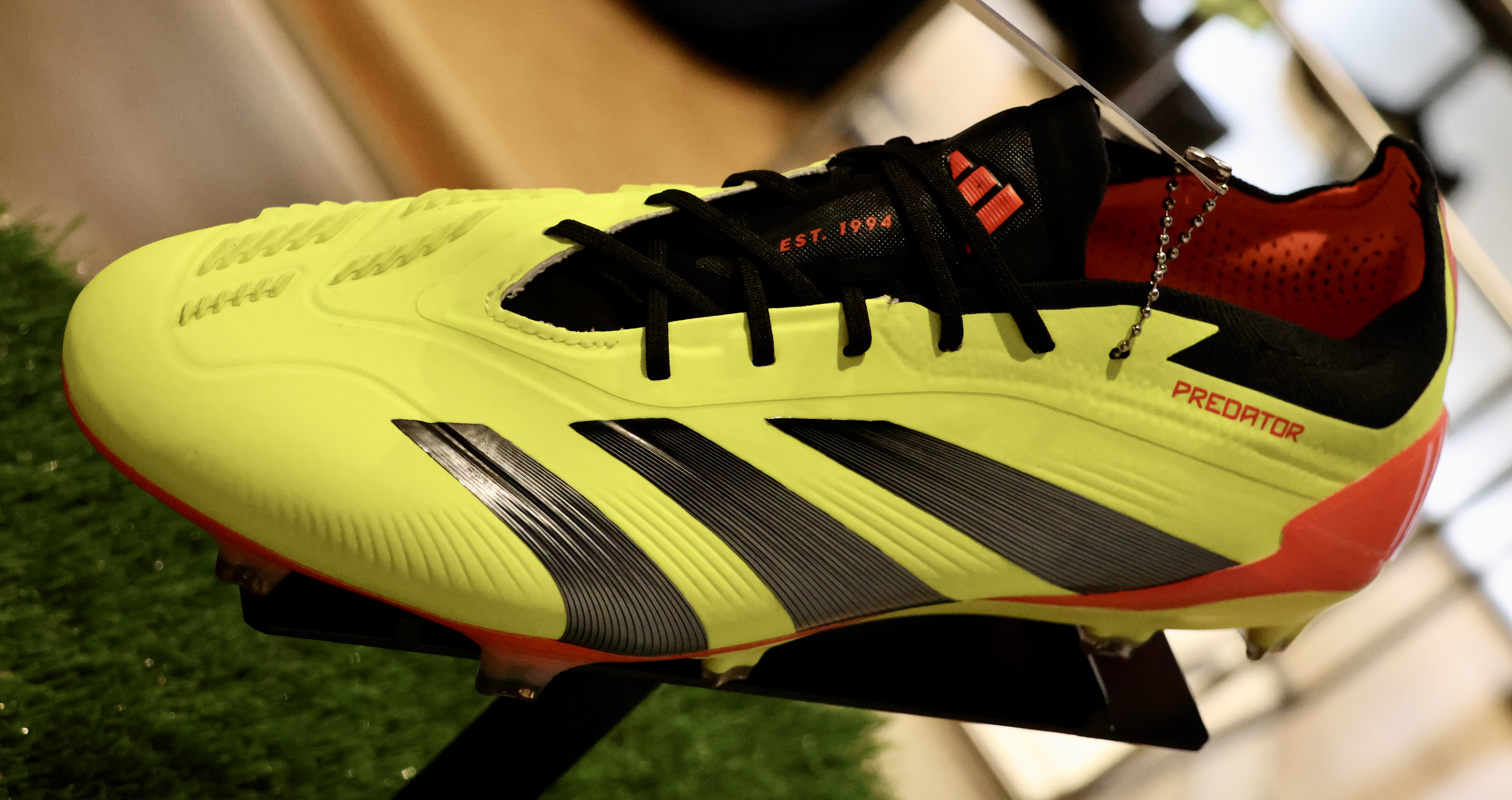
adidas Predator Elite FG, photographed April 5, 2024. Historical example of a tier label; not a current-price or performance comparison. Photo: Pangalau / CC BY-SA 4.0. Displayed resized; list thumbnails may be cropped. The photograph and any image adaptations retain CC BY-SA 4.0.

Two pairs can share a family name and colorway while being different products. The tier is another part of the product identity, alongside its generation and outsole. Before comparing prices, write down the complete name of each pair. Otherwise, a sale can look more impressive than it really is.
Recognize the naming systems
Nike’s soccer guide uses Elite, Pro, Academy and Club. adidas’s U.S. soccer range includes names such as Elite, Pro, League and Club. These are brand-specific labels, not a universal grading scale. Do not assume that similarly named tiers from two companies have identical materials or construction. See the Nike guide and the adidas range for current examples.


Build a side-by-side comparison
Our suggested comparison sheet has six rows. Fill them from the exact product listings, leaving anything unlisted as “not stated” rather than guessing.
- Identity: family, generation, tier and product code.
- Surface: the full outsole label and stated compatibility.
- Upper: the material or construction described for that pair.
- Closure: laces, tongue and collar configuration.
- Fit: your own try-on notes, kept separate from marketing language.
- Total cost: current price, shipping, return conditions and any additional pair needed for another surface.
Decide which difference you are paying for
Read the name as separate pieces of information. In a listing such as “Predator Elite FG,” Predator identifies the family, Elite the tier and FG the outsole category. That shorthand still leaves the generation and exact product code to confirm. A photograph of another Predator cannot supply those missing details.
This is why a tier comparison should begin with two complete identities. Otherwise, a different generation, closure or outsole can be mistaken for a simple step up the same ladder. The 2024 Elite and Pro photographs in this guide illustrate labels, rather than establish current specifications.
Compare the amount you would actually spend
Illustrative prices: Pair A originally listed at $200 and is now $140; Pair B costs $120. The decision is whether A solves a need worth an extra $20 compared with B. Its advertised $60 reduction does not answer that question. These figures are a calculation example, not current product offers.
Our view: pay for a difference you can name and use. A preferred closure that fits is a concrete reason; the position of a tier name in the brand’s hierarchy is only the start of the comparison.
Keep sale comparisons fair
Use the same market and check the size you actually need. Compare the sale price with another available option, not only with a crossed-out original price. A previous-generation premium model and a current midrange model can be a reasonable shortlist, but they still need the same surface and fit checks.
A budget decision to make before shopping
Choose a spending ceiling for the whole setup, including essential equipment. Then list your non-negotiables: the right outsole, an acceptable fit and workable return terms. Let tier differences compete within those limits. This is our buying framework, not a hands-on ranking of current models.
Use a comparison sheet before paying for a higher tier
The table below is our blank decision framework. Fill it with the current specifications of two exact listings. An empty specification should stay “not stated”; it should not become an assumption about which pair is better.
| Comparison row | Pair A | Pair B |
|---|---|---|
| Family, generation, tier and product code | Record the complete identity | Record the complete identity |
| Outsole and intended surfaces | Copy the exact compatibility label | Copy the exact compatibility label |
| Upper and closure | Use the listing’s specific description | Use the listing’s specific description |
| Your try-on result | State your own observations | State your own observations |
| Checkout cost and return terms | Price + shipping + applicable tax | Price + shipping + applicable tax |
| Difference that matters to you | Name the concrete benefit you value | Name the concrete benefit you value |
The break-even question
If one pair costs more, write one sentence explaining what you get for the difference. For example: “I prefer this closure and confirmed the fit in a try-on.” That is a personal buying reason. “It must make me faster because it is the premium tier” is a performance claim this comparison does not establish.
Also ask whether either option forces another purchase, such as a second pair for a different field. The cheaper sticker price is not automatically the cheaper workable setup. This worksheet separates your requirements from the brand’s tier names; it is not a product ranking.
Sources & scope
Research-based buying analysis, updated November 2, 2026. The sale-price calculation is hypothetical. Product photographs identify historical tier-label examples; no comparative wear test is reported.
Keep reading
- AG vs FG vs TF: How to Choose Soccer Shoes for Your Field
- Soccer Cleat Fit Guide: Check Length, Width and Heel Hold
- How to Clean Soccer Cleats: A Simple After-Game Routine
Read next
01
See an Elite purchase in context
Follow a discounted Tiempo AG order and what the unboxing can show.
Response
[…] Soccer cleat tiers explainedSeparate the product tier from the player edition and colorway. […]