
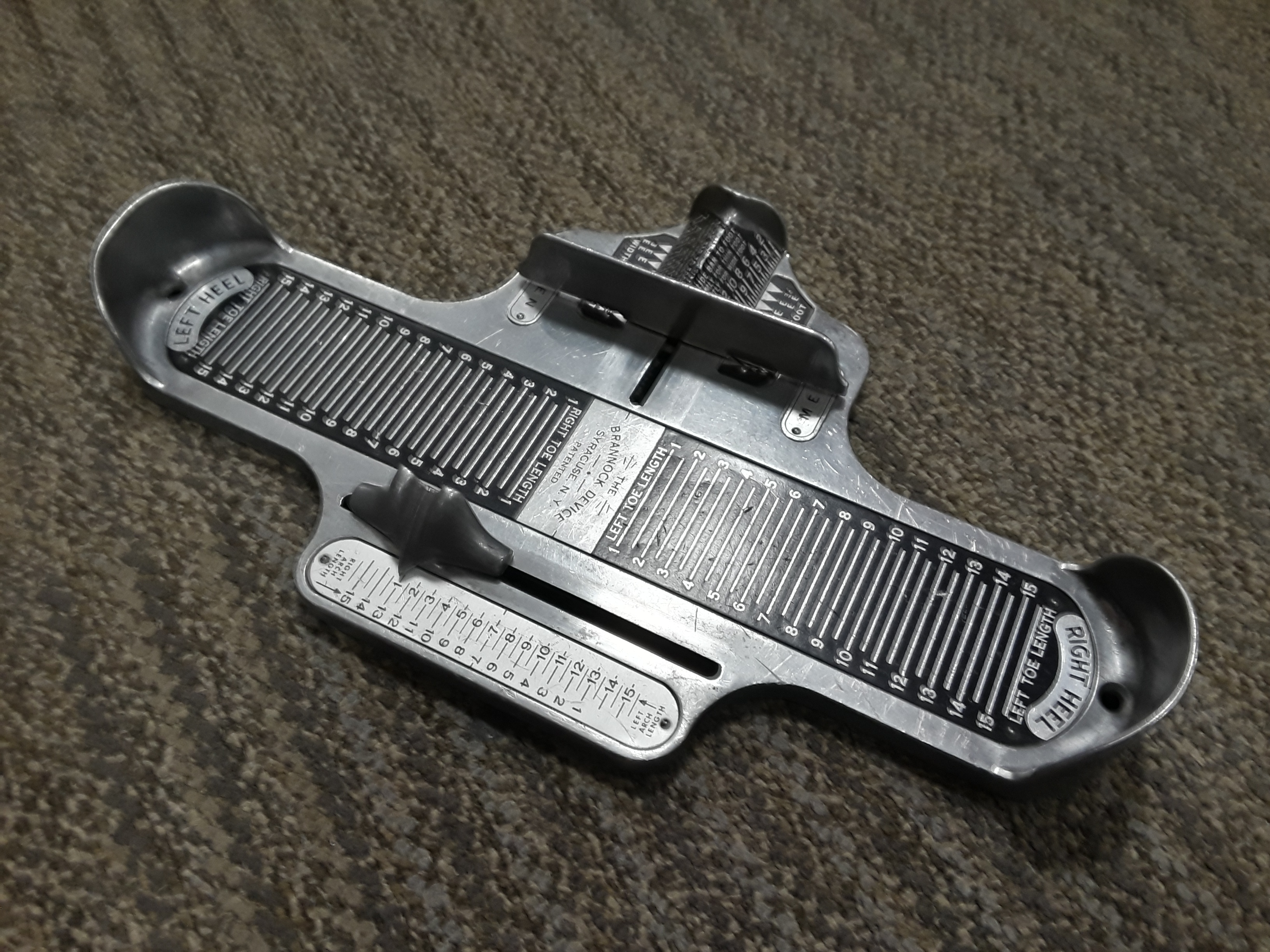
A Brannock device separates length and width measurements. A store measurement is a starting point; check the boot brand’s chart and try on the exact model. Photo: Ser Amantio di Nicolao, CC BY-SA 4.0. Displayed resized; image adaptations retain the same license.

A familiar size number is a starting point, not a fit guarantee. Soccer cleats should feel secure, but buying a pair that squeezes your toes is not a useful shortcut to better touch. Our approach is to separate length, width and heel hold, then decide whether a different size or a different shape is the better answer.
Start with the correct chart
Measure your feet using the brand’s instructions and use the chart for the product you are considering. Nike specifically notes that its shoe-label “CM” value is different from measured foot length in centimeters. Do not copy a box label into a foot-length field. Also check whether the listing uses U.S. men’s, women’s or youth sizes; use the brand’s own conversion rather than assuming the same number means the same fit. Nike’s soccer size guide explains these distinctions.

Run a consistent try-on
- Use the socks and any inserts you intend to play in. Compare both shoes while standing.
- Check the front: your toes should not be jammed against the end. adidas describes a snug fit with room to move the toes.
- Check the sides and upper: note where you feel concentrated pressure rather than judging only the length.
- Check the heel: walk and make gentle movements on a clean, permitted surface. Record obvious lifting or sliding.
- Try the other size or another model under the same conditions. Keep notes so you are comparing more than a first impression.
Do not fix every width problem with extra length
As an editorial decision rule, we suggest trying another model when the only way to relieve side pressure is to accept unwanted space at the front or heel. That is a reason to reconsider the shape, rather than automatically ordering larger. Nike itself distinguishes contoured and natural fit preferences in its soccer guidance; even within one brand, the intended feel can differ.
Keep the return option intact
Before testing outside, read the retailer’s current return conditions. Use a clean indoor try-on for the initial decision and keep the packaging while you compare. A product’s break-in description is not proof that a pressure point will disappear. If a pair causes pain, stop the try-on instead of using a long session to force a decision.
Write down the decision
Save the exact model, generation, tier, size and outsole, plus your sock setup and the issue you noticed. “Too tight” becomes more actionable when your note says where. These details also make a later hands-on review more useful to another reader.
Keep a try-on scorecard
Compare pairs with the same socks and inserts, on a clean surface permitted by the retailer. Record the location of a problem rather than reducing the entire fit to a single score.
| Check | Useful note | Question before keeping the pair |
|---|---|---|
| Toe area | Which toe touches, and during which movement? | Does the problem persist after a different lacing adjustment? |
| Forefoot width | Inside edge, outside edge or both? | Would another model shape be a better comparison? |
| Upper pressure | Where does the upper press or bunch? | Are you changing the size to solve a different issue? |
| Heel | When does it lift or move? | Is the rest of the shoe also roomy? |
| Repeatability | Left and right foot; same sock setup | Does the second try-on confirm the first impression? |
Make a decision you can explain
An example note might read: “Pair A has enough toe room, but the outside of the forefoot feels compressed; Pair B removes that pressure without extra heel movement.” This is an illustrative note, not a result from our testing. It explains the choice better than “A is a bad cleat.”
Keep the product code, size and date with the note. If you later change socks or inserts, treat that as a new setup rather than assuming the original fit decision still applies. Follow the seller’s return conditions before taking either pair outside.
Sources & scope
Research-based guide. Sources checked November 1, 2026. This article is not a hands-on product test.
Keep reading
- AG vs FG vs TF: How to Choose Soccer Shoes for Your Field
- Soccer Cleat Tiers Explained: Compare the Pair, Not Just the Name
- How to Clean Soccer Cleats: A Simple After-Game Routine
Read next
02
Check surface compatibility too
Fit and outsole choice answer different parts of the buying decision.
03
Read a documented AG unboxing
See the model, ordered size and checkout without invented fit claims.