
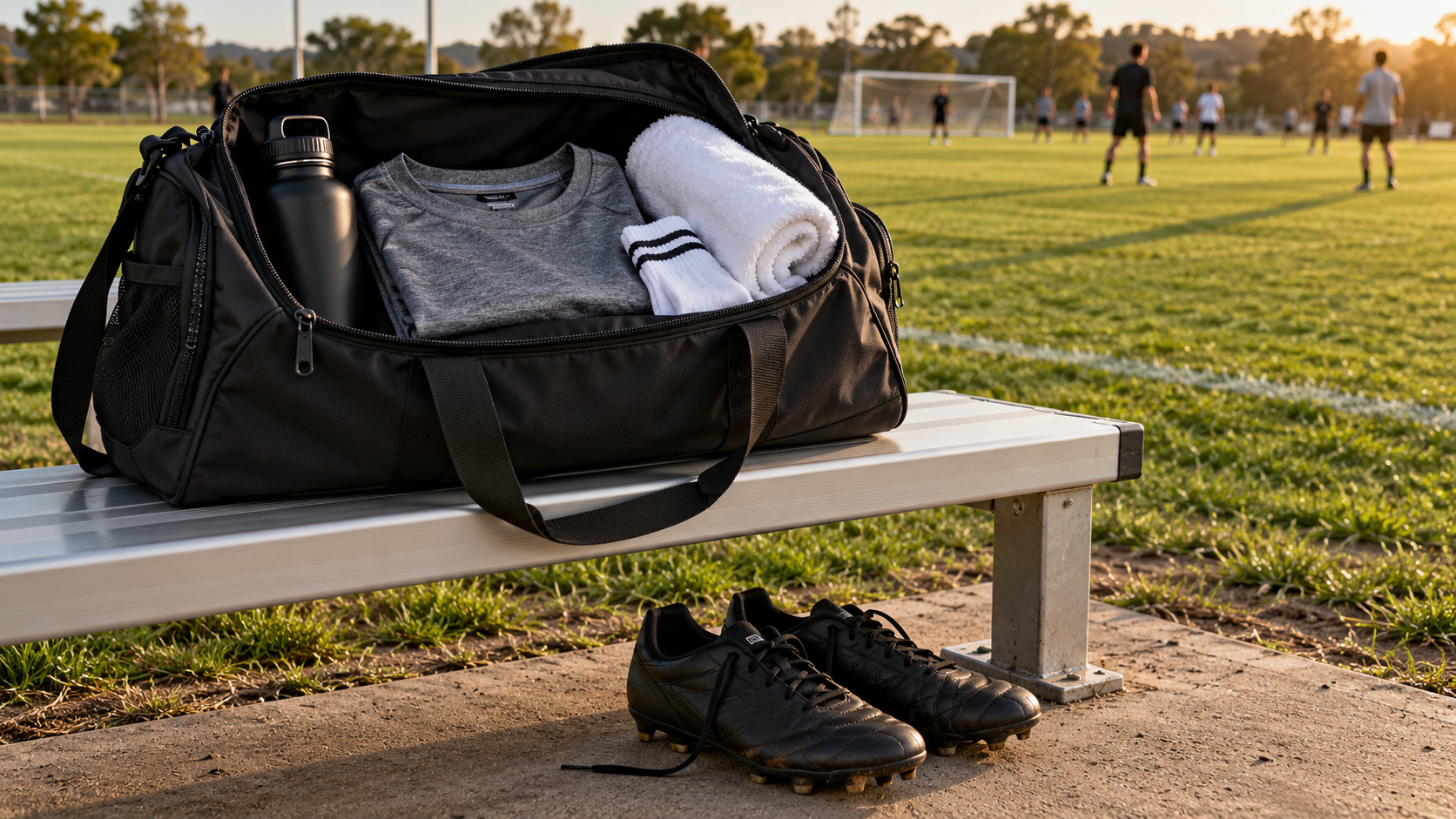
AI-generated illustration of packing for recreational soccer. Generic equipment is shown for context.
Joining your first adult game should not begin with an expensive shopping cart. Start by finding out what you are joining. A casual pickup session, an indoor facility and an organized outdoor league may have different expectations. This guide provides a planning checklist; the organizer’s current rules decide what you need for that game.
Ask the organizer five questions
- Is the session beginner-friendly, and how are teams or skill levels arranged?
- What is the exact venue, field surface and permitted footwear?
- What equipment or shirt colors must each player bring?
- What are the fee, cancellation terms and any registration requirements?
- When should a first-time player arrive, and who is the on-site contact?
Save the answers together with the location. If the invitation only says “turf,” ask for more detail before buying shoes. If you are paying a season fee, distinguish that commitment from a one-session trial. These are planning suggestions, not claims about a particular league.
Understand the equipment baseline
The 2026/27 version of IFAB Law 4 lists a sleeved shirt, shorts, socks, covered shin guards and footwear as compulsory equipment. Its updated accessories rule allows non-dangerous items when safely and securely covered; dangerous items must be removed. Check the edition and any local rules used by your competition, rather than relying on an older blanket jewelry-ban summary. The IFAB change explanation sets out that update.
Correction, November 2, 2026: this equipment section now reflects the 2026/27 accessories amendment instead of a blanket jewelry-ban statement.

Keep the first purchase focused
Our suggested spending order is to resolve required equipment and surface-compatible footwear first. Check what you already own, then make a short list of what is missing. Put optional extras in a second list until you know how often you will play. A ball, pump or spare shirt may be useful to bring, but ask whether the organizer already supplies what the session needs.
Prepare a simple arrival plan
Check parking or transit, the correct entrance and the playing area before leaving. Pack your agreed kit, drinking water and a way to carry dirty gear home. Send any skill-level questions to the organizer in advance so the first few minutes can be about meeting teammates rather than sorting out a mismatch.

Use the first session to learn
Use the first session to learn the group as well as the game. Before joining a team, ask who manages substitutions, how teams are balanced and what happens when a player needs to leave early. These are practical questions that a shirt color or registration receipt cannot answer.
Our suggested introduction is simple: tell the organizer that it is your first session, give an honest description of your experience and ask where to wait until you are assigned. Agree how to rotate off before the game starts. This is etiquette guidance, not a claim that every pickup group uses the same system.
After playing, separate three observations: the format (did you understand the rotations?), the setting (was the journey workable?) and the kit (what was genuinely missing?). Choose the next step from those notes. A new pair of boots cannot resolve an unsuitable time slot or an unclear team arrangement.
Your first-game confirmation card
Put the following answers in one note before leaving. It is a planning tool you can reuse for another venue, rather than a universal set of rules for every adult game.
| Item | Answer to save |
|---|---|
| Session | Date, start time and requested arrival time |
| Location | Venue, correct entrance and field identifier |
| Contact | Organizer’s name and the agreed contact method |
| Format | Pickup or organized competition; suitability for a beginner |
| Equipment | Footwear rules, required protection and shirt colors |
| Money | Session or season fee, payment method and cancellation terms |
| Getting home | Parking or transit plan and travel time |
Pack from the answers, not from a shopping list
If the organizer provides a ball, buying one is not necessary for that first session. If a specific shirt color is needed, put that requirement ahead of an optional accessory. Check what you already own against the confirmed requirements and borrow an appropriate item when that is practical.
After the game, keep three short notes: what worked, what you missed and whether you want to return. This turns the next purchase into a response to a real need. It also makes it easier to compare a second session without confusing a one-off issue with the overall format.
Sources & scope
Research-based starter guide, updated November 2, 2026. The equipment section reflects the IFAB 2026/27 wording; check the edition and local rules used by your competition. Session-planning advice is Into Soccer’s own framework.
Keep reading
- AG vs FG vs TF: How to Choose Soccer Shoes for Your Field
- Soccer Cleat Fit Guide: Check Length, Width and Heel Hold
- Soccer Cleat Tiers Explained: Compare the Pair, Not Just the Name
Response
[…] own games, confirm the governing edition and local competition instructions with the organizer; our adult soccer starter guide covers the questions to settle before joining. Do not transplant a TV procedure into an informal […]