
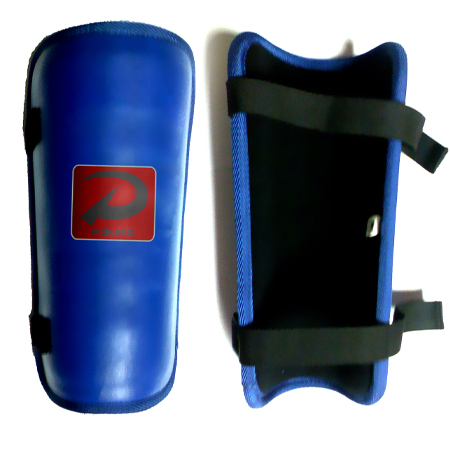
Shin pads shown as a general equipment example, not one of the current product recommendations. Photo: Tibaexpo / Public domain dedication. Displayed resized; list thumbnails may be cropped.


A shin-guard purchase starts with what your competition requires, then the fit of the actual product. A small-looking guard is not automatically a good choice, and a premium price is not a substitute for checking the size and how it stays in place. Here is a practical sequence for narrowing the options without pretending that a shopping guide can certify protection.
Begin with the rule baseline
IFAB Law 4 requires shin guards made from suitable material and sized to provide reasonable protection, worn under the socks. It makes players responsible for their suitability. Confirm the rules of your own league as well, including any required product marking or equipment inspection. Read the current Law 4.
Check the exact size chart
adidas identifies player height as an important starting point in its shin-guard guidance and sells different styles, including slip-in guards and designs with ankle coverage. Use the chart for the exact model, not a size letter remembered from another brand. A junior product name in a shopping result is also a reason to check the intended sizing rather than choose solely by price.


Use a three-stage comparison
| Stage | What to check | What to record |
|---|---|---|
| Before ordering | Competition requirements and the model’s size chart | Required markings, size basis and return conditions |
| Clean try-on | Position, coverage and the supplied retention method | Whether the setup stays in position during gentle movement |
| Full kit check | How the guard and socks work together | Any movement, bunching or pressure that needs resolving |
Our suggested approach is to compare one variable at a time. If you change the guard, sleeve and socks together, it becomes harder to identify which part of the setup is causing a problem. Follow the maker’s fitting instructions; do not modify equipment in a way that conflicts with them.
Choose the retention system deliberately
Think of the purchase as guard + retention + sock. A shell that fits your intended coverage can still leave an unresolved question about how the complete setup stays in position. A supplied sleeve, separate sleeve or strap changes what you need to buy and try on.
| Design route | The question that matters |
|---|---|
| Slip-in shell | Does the box include its intended sleeve or other retaining part? |
| Guard with straps | Can you follow the maker’s fastening instructions comfortably in the full kit? |
| Design with ankle coverage | Does the additional structure work with the exact size and footwear you use? |
Illustrative cost comparison: a $15 shell that requires a $10 sleeve creates a $25 setup; a $22 package including the required retention costs $22. These are invented figures to explain the comparison, not current offers or a protection ranking.
Into Soccer’s view: decide the required coverage and fit first, then compare the complete setup cost. A professional player’s photograph cannot tell you which size suits your leg, and a price comparison cannot establish impact protection. Use the product instructions and your competition’s requirements for those decisions.
Know when to ask someone else
If you cannot establish that a product meets the competition’s requirements, ask the organizer before the match. If the shell or its retaining parts are damaged, ask the manufacturer about continued use or replacement. This article does not compare impact protection, promise injury prevention or recommend the smallest possible guard.
Sources & scope
Research-based guide, updated November 2, 2026. Cost figures in the retention example are hypothetical. Use the exact product’s fitting instructions and your competition’s requirements.